How to Niche Down into Restaurant Web Design (And Why It Pays)
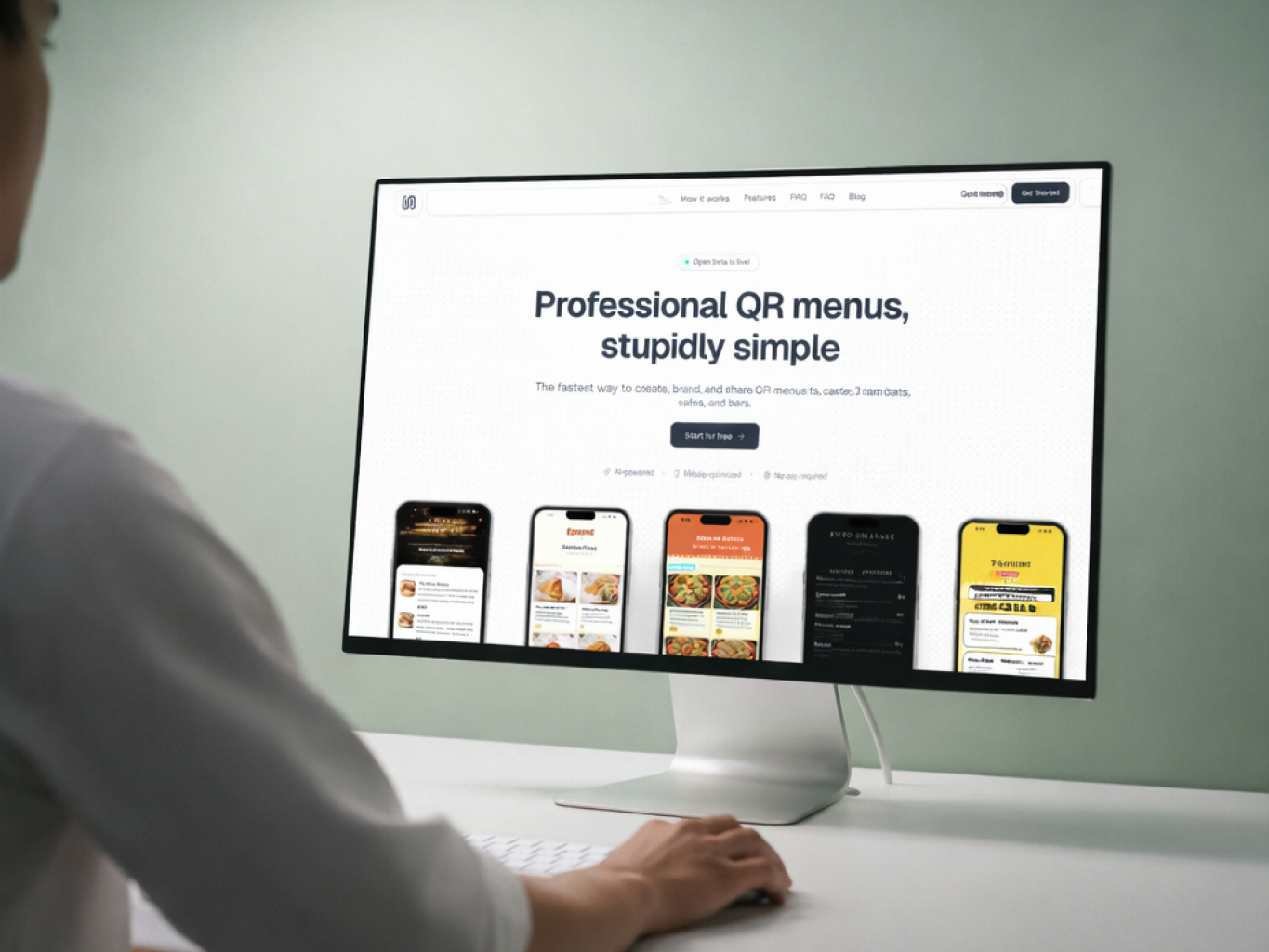
The generalist freelancer’s pitch goes something like this: “I build websites for small businesses.” It’s broad enough to capture any lead, specific enough to sound professional, and vague enough that it doesn’t really differentiate you from the other ten thousand freelancers saying the same thing.
The generalist approach works when you’re starting out and need to take whatever work comes through the door. But at some point, the math stops working. You’re competing on price with everyone who owns a laptop and a Squarespace account. Every project requires learning a new industry from scratch. And clients view you as interchangeable, easy to hire and easy to replace.
Niching down changes that equation. And restaurants happen to be one of the most profitable, referral-rich, and sustainable niches a web designer or small agency can specialize in.
Why Restaurants Are an Exceptional Niche
Not all niches are worth it. Some are too small, too competitive, or too hard to break into. Restaurants hit a sweet spot on almost every dimension that matters.
The Numbers Are in Your Favor
There are over one million restaurants in the United States alone, with thousands of new ones opening every year. Most of them need digital services (websites, online menus, local SEO, social media) and most of them don’t have anyone handling those things well.
Unlike tech startups or e-commerce brands, restaurants generally aren’t sophisticated buyers of digital services. They know they need a website and a Google listing. They know they probably need a better online menu. But they don’t know how to evaluate agencies, and they often don’t know what good looks like. That’s an advantage for a specialist who can walk in with industry expertise and immediately establish credibility.
Repeat Business Is Built In
Restaurants have ongoing needs. Menus change seasonally. Specials rotate weekly. New locations open. Branding evolves. Photography needs refreshing. Events need promotion.
A generalist freelancer builds a website and moves on. A restaurant specialist builds a website, then manages the digital menu, then updates the photography, then optimizes the Google Business Profile, then helps with a second location launch. One client can generate years of work across multiple service lines.
Referral Networks Are Dense
Restaurant owners talk to each other. They’re in the same neighborhoods, they attend the same industry events, they share vendors and suppliers. When one restaurant owner finds a freelancer who understands the industry, that recommendation spreads.
This is particularly true in local markets. If you become known as “the restaurant web designer” in your city, inbound leads start arriving without any marketing effort. Restaurant owners ask other restaurant owners who built their website, and your name keeps coming up.
The Industry Is Recession-Resistant (Enough)
People always need to eat. Individual restaurants come and go (the failure rate is real), but the industry as a whole holds up well. Even during downturns, restaurants keep opening, operating, and spending on their digital presence. Your client mix might shift (fine dining might contract while fast-casual expands), but the overall market doesn’t disappear.
The Real Benefits of Specializing
Niching down isn’t just about finding clients more easily. It changes how your whole business works.
You Can Charge More
Specialists command higher rates than generalists. This is true across every industry, and it’s especially true in web design. A freelancer who builds “websites for small businesses” competes on price. A freelancer who builds “websites and digital menu systems specifically for restaurants” competes on expertise.
When you specialize, you bring industry-specific knowledge that generalists don’t have. You know that restaurant websites need fast-loading menus (not PDF downloads). You know that Google Business Profile optimization matters more than Instagram for driving covers. You know that online ordering has to work well on mobile. That knowledge is worth real money, and clients will pay for it.
The rate difference is significant. Generalist freelancers in web design typically charge $2,000-5,000 for a restaurant website. Specialists who understand the industry, deliver menus alongside the website, and offer ongoing digital services can command $5,000-10,000 for the initial project plus $150-500 per month in recurring services.
Your Sales Cycle Shortens
When you speak a restaurant owner’s language (covers, ticket averages, seasonal menus, health department regulations, reservation flow), the trust-building phase gets much shorter. You don’t have to explain why you understand their business. Your portfolio, your website copy, and your initial conversation all signal that you’re an insider, not a generalist who just learned what a prix fixe menu is.
Shorter sales cycles mean less time spent on proposals that go nowhere. More of your time goes into billable work rather than unpaid business development.
Your Delivery Gets Faster
The twentieth restaurant website you build takes a fraction of the time the first one did. You’ve solved the common problems already. You know which page templates work. You know how to structure a menu for mobile. You know what photography guidance to give. You know which questions to ask during the kickoff call.
The client doesn’t see this (they still see a custom project), but it’s huge for your bottom line. If a project takes 40 hours instead of 80 and you charge the same rate, your effective hourly rate just doubled.
Your Portfolio Compounds
Every restaurant project you complete makes the next one easier to sell. A portfolio of ten restaurant websites is far more convincing to a restaurant owner than a portfolio of ten websites across ten different industries. Each project reinforces your positioning and provides social proof to the next prospect.
Over time, this builds on itself: more restaurant projects mean a stronger portfolio, which brings in more restaurant leads, which means more projects. Generalists never get this kind of momentum because their portfolio is scattered across unrelated industries.
How to Position Yourself as a Restaurant Specialist
Specializing isn’t just about deciding to focus on restaurants. You need to communicate that focus clearly and consistently.
Your Website
Your own website is the first thing potential clients evaluate. It should make your specialization immediately obvious:
- Homepage headline: Not “Web Design for Small Businesses” but “Web Design and Digital Menus for Restaurants.”
- Case studies: Feature restaurant projects prominently, with before/after comparisons and results.
- Services page: Describe your offerings in restaurant-specific terms. Don’t just say “website design.” Say “restaurant website design with integrated digital menus, reservation systems, and local SEO.”
- Blog content: Write about restaurant-specific topics. Menu design, QR menu setup, local SEO for restaurants, restaurant photography tips. This builds your authority and captures search traffic from restaurant owners looking for help.
Your Portfolio
If you’re transitioning from generalist to specialist, you may need to create spec work to fill portfolio gaps. Design two or three restaurant websites as passion projects. Create QR menu mockups for fictional restaurants. Show the breadth of restaurant types you can serve: a fine dining restaurant, a casual cafe, a craft cocktail bar.
These spec projects don’t need to be published live. They just need to demonstrate that you understand restaurant design language: food photography, menu layouts, brand atmospheres, mobile-first navigation patterns.
Your Outreach Language
When reaching out to potential restaurant clients, avoid generic web design language. Instead of “I noticed your website could use an update,” try “I noticed your online menu is a PDF that takes 12 seconds to load on mobile. That’s costing you customers every day.”
That kind of specificity shows you’ve actually looked at their situation and understand the problems. It’s the difference between sounding like a cold-calling freelancer and sounding like someone who knows the industry.
Services to Offer
Once you’ve positioned yourself as a restaurant specialist, you can offer a range of services that build recurring revenue rather than relying on one-time projects.
Core Service: Website Design
The foundational offering. Restaurant websites have specific requirements: fast-loading menus (not PDFs), mobile-first design, integration with reservation systems, Google Maps embed, clear hours and location information, and food photography that makes people hungry.
Typical project fee: $4,000-10,000 depending on complexity and market.
High-Value Add-On: QR Digital Menus
This is one of the highest-margin services in the restaurant web design niche. A professional QR menu takes minimal time to set up (especially with AI-powered tools) but delivers ongoing recurring revenue.
The pitch writes itself: “Your customers are scanning QR codes and landing on a PDF that looks terrible on their phone. A digital menu loads instantly, looks beautiful, and you can update it anytime without reprinting anything.”
Typical monthly fee: $50-150/month for setup, customization, and management.
Using a platform like MenuStack, the actual platform cost is $12/month per menu on the Pro plan, or free for basic menus. The rest is your margin for design, setup, and ongoing management.
Ongoing Retainer: Digital Presence Management
Bundle website maintenance, menu updates, Google Business Profile optimization, and basic social media guidance into a monthly retainer. One-time projects become ongoing accounts.
A typical bundle might include:
- Website hosting and maintenance
- QR menu management and updates
- Monthly Google Business Profile optimization
- Quarterly website content updates
- Basic analytics reporting
Typical monthly fee: $200-500/month.
Seasonal Service: Menu Redesign and Photography Coordination
Restaurants that change their menus seasonally (and most should) need updated photography and design work every quarter. Position yourself as the person who handles this transition smoothly, coordinating with the kitchen, arranging photography, updating the digital menu and website simultaneously.
This becomes a recurring quarterly project rather than a one-time engagement.
Expansion Service: Multi-Location Rollouts
When a client opens a second location, you’re the natural choice for handling the digital setup. A new website (or microsite), new digital menus, new Google Business Profile, new QR codes. Each location expansion is a project plus an ongoing retainer increase.
Getting Your First Restaurant Clients
Start Local
Walk around your neighborhood or city center. Visit restaurants. Look at their websites on your phone. Check if they have QR menus and how those menus look. This casual research will quickly reveal which restaurants need help and what kind of help they need.
The best prospects are restaurants that are clearly investing in their business (renovated space, good food, active social media) but have a neglected digital presence (old website, no online menu, poor Google listing). These owners care about quality. They just haven’t found someone to handle the digital side.
Partner with Adjacent Service Providers
Food photographers, POS system sales reps, restaurant supply companies, and commercial real estate agents all talk to restaurant owners every day. Get to know these people and you’ll start getting referrals without doing any outreach.
It goes both ways. Recommend a food photographer to your client, and that photographer recommends you to theirs. These relationships grow over time and turn into a professional network around the restaurant industry.
Attend Restaurant Industry Events
Local restaurant associations, food service trade shows, and hospitality industry meetups are concentrated sources of potential clients. Attending these events as a specialist, not just a “web designer” but a “restaurant digital specialist,” positions you as someone who belongs in the room.
Bring business cards that clearly state your specialization. Have your phone ready to show restaurant website examples and QR menu demos. Be prepared to have quick conversations about common restaurant digital pain points.
Offer a Free Audit
A free digital presence audit is one of the most effective ways to start a conversation with a restaurant owner. Review their website, Google listing, online menu, and social media presence. Document specific issues and opportunities in a short, visual report. Present it in person over a coffee.
This works because it shows what you know, gives them something useful upfront, and naturally leads into a paid engagement. The audit shows the problems; your proposal shows the solutions.
Common Objections (And How to Handle Them)
“I’m afraid of turning away non-restaurant work.”
You don’t have to refuse non-restaurant projects, especially in the beginning. Niching down means focusing your marketing and positioning on restaurants. It doesn’t mean signing a blood oath. If a non-restaurant project comes along and the money is right, take it. Just don’t let it dilute your positioning.
Over time, as your restaurant pipeline fills up, you’ll naturally take fewer non-restaurant projects because you won’t need them.
”What if the restaurant industry has a downturn?”
Individual restaurants fail all the time. The industry as a whole doesn’t. New restaurants open to replace the ones that close, and the overall market keeps growing. Your specific clients will rotate, but the demand for restaurant digital services isn’t going anywhere.
”My market is too small for a restaurant niche.”
Unless you live in a very small town, there are more restaurants within your reach than you can serve. A mid-sized city has hundreds or thousands of restaurants. You only need 15-25 active clients to run a healthy freelance business or small agency.
And “your market” isn’t limited to driving distance. Digital menu setup, website design, and ongoing management can all be done remotely. Your local market is where you start, but your serviceable market is much larger.
”I don’t know anything about restaurants.”
You know more than you think. You eat at restaurants. You’ve looked at menus on your phone. You’ve been frustrated by a slow-loading PDF menu or a restaurant website that doesn’t list its hours.
The industry-specific knowledge you need (POS systems, menu engineering basics, health department considerations) can be learned in a few weeks of focused research. Read industry publications, follow restaurant industry accounts, and have honest conversations with restaurant owners. The learning curve is manageable, and the knowledge accumulates quickly once you start working with clients.
The Long Game
Niching down into restaurant web design isn’t a quick win. It’s a long-term play that gets stronger every year. Each year of specialization means deeper expertise, more portfolio pieces, a bigger referral network, and a better reputation in the space.
After two years of focusing on restaurants, you’ll have a portfolio that no generalist can match, a referral network that generates leads organically, operational efficiency that lets you deliver faster and more profitably, and a clear market position that makes you the obvious choice for restaurant owners in your market.
The freelancers and small agencies doing well right now aren’t the ones who do everything for everyone. They’re the ones who picked a lane, stuck with it, and let the momentum build. Restaurants are one of the best niches out there: big enough to sustain a business, specific enough to stand out, and stable enough to build a career around.